Software as a Service (SaaS) marketing is a term that refers to the strategies and tactics of promoting and selling cloud-based software products. SaaS marketing is quite different in that it does not just involve a single sale of a product as traditional product marketing does. Since SaaS products are usually subscriptions, the objective is not only to find customers, but also to retain them and make them continue paying every month.
SaaS marketing is much more information based and customer oriented. It is based on online platforms, ongoing optimization, and an in-depth comprehension of human behavior. Free trials to onboarding emails, each touch point will be crafted to take the potential customer on a long-term relationship with the product.
Why SaaS Marketing Is Different
SaaS marketing is not the same as traditional marketing due to the character of the product itself. Trust and value are important aspects since users do not physically have the software and can cancel anytime.
A significant change is the subscription model. SaaS companies focus more on such metrics as Monthly Recurring Revenue (MRR), Customer Lifetime Value (CLV), and churn rate than on immediate revenue. This changes the marketing strategy to a long-term engagement approach as opposed to the short-term conversion approach.
The other important difference is the significance of product experience. In SaaS, marketing the product is often self-promoting. Free trials, freemiums, and demos enable users to get a feel of value before making a commitment. This implies that marketing and product teams have to be closely integrated in order to provide a seamless user experience.
Last but not least, SaaS marketing heavily depends on digital marketing channels like content marketing, emailing, and search engines optimization (SEO) as the majority of SaaS products are sold via the internet.
Core Components of SaaS Marketing
The nature of SaaS marketing is founded on a number of fundamental elements which are interrelated and work towards the growth. All these elements will attract, convert, and retain customers.
Content marketing: It is one of the most important elements. The case studies, videos, guides, and blog posts can be used to educate potential customers and gain their trust. A good content also enhances search engine ranking, and thus, users can easily find out about the product.
Search engine optimization (SEO): It makes sure that your content will be displayed in the search results when potential customers are seeking solutions. These involve keyword research, on page optimization and technical enhancements of your web site.
Paid advertising: It can assist in speeding up the growth, by reaching a particular audience. Such platforms as Google Ads and social media enable SaaS companies to access users that actively seek similar solutions.
Email marketing: It plays a crucial role in developing leads and keeping customers. Users are introduced to the product via automated email sequences that showcase features, and prompt upgrades.
Product-led marketing: It is about allowing the product to lead to acquisition and growth. Free trials and freemium formats, in-app prompts can be used to turn users into paying customers.
The SaaS Marketing Funnel
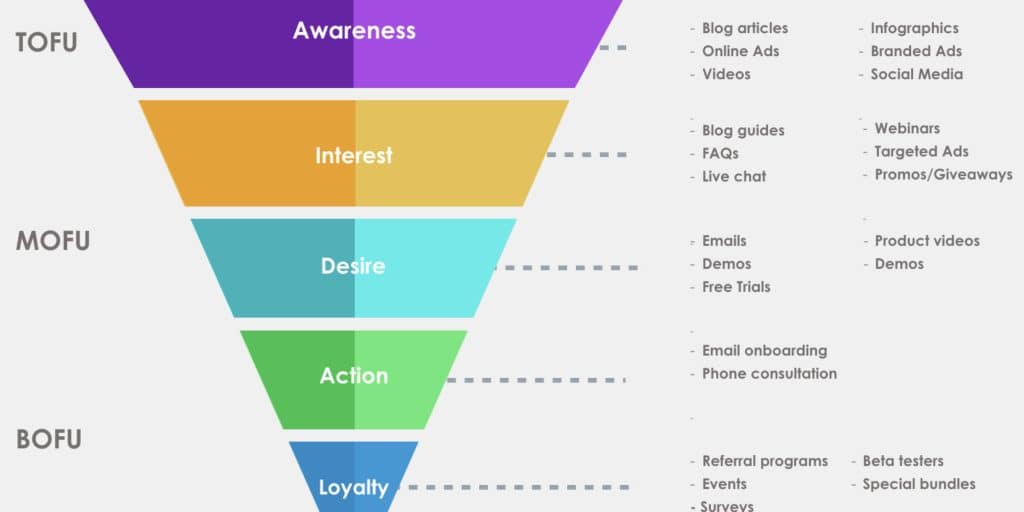
The SaaS marketing funnel is the process that a customer goes through on the way to learning about your product and becoming a long-term user. It generally has a number of steps, such as awareness, consideration, conversion, retention, and advocacy.
The awareness stage will involve the first awareness of the product by the potential customers. This is normally fueled by SEO, social media and content marketing.
In the consideration stage, users assess whether or not your solution suits their needs. Particularly helpful here are case studies, webinars, as well as product comparisons.
The conversion phase involves users registering on a free trial or buying a subscription. The use of clear messaging, solid calls-to-action and a smooth signup process are essential.
As soon as the users are onboard, the emphasis is switched to retention. This will include continuous value delivery, good customer service and frequent updates to ensure that users are not bored.
Lastly, you will have satisfied customers at the advocacy stage promoting your product through reviews, referrals, and testimonials. This can greatly lower the acquisition costs and translate into organic growth.
Key Metrics in SaaS Marketing
To gauge success in SaaS marketing, it is important to track the right metrics. Due to the subscription nature, the traditional measures such as one-time sales are not sufficient anymore.
- Monthly Recurring Revenue (MRR) is one of the fundamental metrics to demonstrate predictable revenue due to subscriptions. It assists businesses to know the trends of growth over the years.
- Customer Acquisition Cost (CAC) is an indicator that quantifies the cost involved in acquiring a new customer. It is essential to ensure this is kept down whilst maintaining quality leads to profitability.
- Customer Lifetime Value (CLV) approximates the amount of revenue a customer will bring on board in the relationship between the company and the customer. Healthy SaaS business makes sure that there is a very high CLV as compared to CAC.
The churn rate is the percentage of cancellers of their subscriptions. One of the most significant objectives in marketing SaaS is to reduce churn.
Conversion rates follow the effectiveness with which leads flow through the funnel, visitors to trial users to paying customers.
Through the metrics, SaaS marketers will know what is working and make data-driven decisions to enhance performance.
Best Practices for Effective SaaS Marketing
Effective SaaS marketing is the combination of strategy, creativity and constant improvement. Knowing your target audience is one of the most important practices. Defined buyer personas will make it easier to communicate with your target audience and make sure that your campaigns are heard by the right people.
The other important practice is the emphasis on value-driven messages. Rather than enumerating features, emphasize how your product will make problems go away and make the lives or businesses of users easier.
Unity is also essential. Your website, your emails, in all communications, your brand and value proposition should be reinforced.
Onboarding is also an important investment. The effectiveness of the onboarding process will lead to a higher likelihood that the users will perceive value within a short period and proceed with consumption of the product.
Lastly, never stop testing and optimizing. SaaS marketing is based on experimentation. Analytics, user comments, and A/B testing will help refine strategies and improve results in the long run.